SKIN STUDIES 03 / WHAT YOU MAY NOTICE
GHK-Cu Skin Tests Found More Collagen, With Limits
Firmness, lines, and irritation are what you can see or feel. The studies offer clues, but the trials in people were small.
GHK-Cu made skin cells produce more collagen
A dish test found that human skin cells made more collagen from 10^-12 to 10^-11 M. In plain terms, the second lab amount was ten times the first.
Collagen was highest near 10^-9 M, or one billionth of the mix. Cell count stayed flat [1].
The same review reported extra soft material that holds water and spaces collagen [4]. You may think of it as padding around the skin’s support.
GHK in blood falls with age. It went from about 200 billionths of one gram in each milliliter at age 20 to 80 billionths of one gram in each milliliter by age 60.
Small cream trials found denser skin, greater firmness, and gentler-looking lines than placebo, a cream without GHK-Cu [4]. I’d keep their small size in view.
The 2025 paper said collagen rose in 70% using GHK-Cu, 50% using vitamin C, and 40% using retinoic acid [4][15]. Those groups weren’t compared in one fair trial.
The collagen synthesis research offers an early finding, not a forecast. Your mirror can’t tell why skin looks different.
When you look in your mirror, you may see firmness or softer lines, but you can’t tell which tissue changed or whether the cream caused what you see. Your eyes can’t settle the cause.
Only some GHK-Cu crossed the outer skin in lab tests
A lab test used slices of donated human skin. Copper crossed at less than one ten-thousandth of a centimeter over an hour, the 10 to minus 4 centimeters-per-hour scale.
After 48 hours, 97 micrograms per square centimeter remained in the skin [10]. The test left unanswered whether that amount helped a face.
The paper uses 2 twice to mark a square skin area. Each 2 means “square,” not a dose.
Plain GHK had trouble crossing the oily outer layer. In a 2025 review, none crossed whole skin without tiny needles [15].
Those needles moved about 134 nanomoles, a very small lab amount, through the skin. A changed form also mixed with skin oil more readily.
Fat bubbles and oil-water blends are being tested too [15]. They aim to move GHK inward, but don’t prove a better result.
Here’s what matters for your cream. A large label amount won’t help if little gets through the outer layer.
Crossing skin comes before any skin effect. Even then, a useful human change still needs proof.
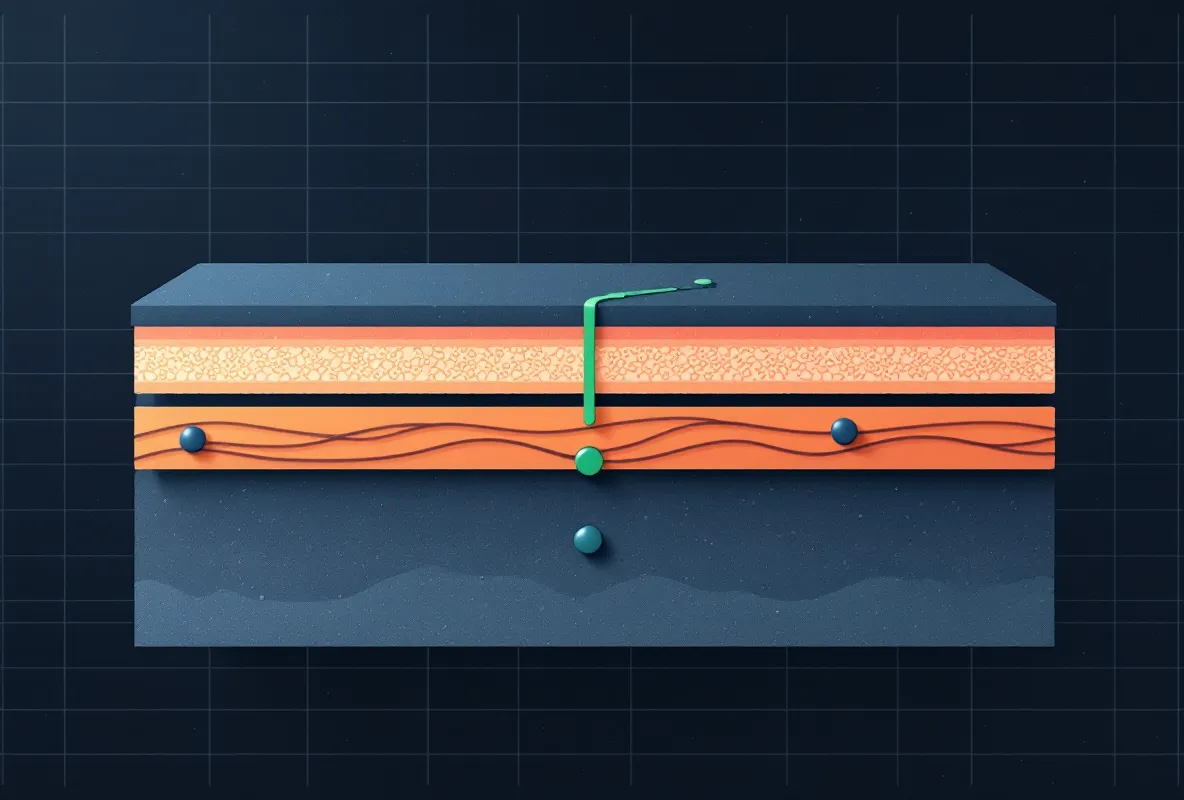
GHK-Cu changed water-holding tissue and repair in cells
Collagen isn’t the only support under your skin. A review found more soft tissue that holds water and keeps collagen spaced [4].
Those changes may give skin more spring. The review linked them with denser skin and less looseness [4].
Skin must also clear worn tissue before rebuilding. GHK-Cu increased cutting proteins numbered 2 and 9, plus proteins that restrain them [2][5].
Both sides changed in cells grown in a dish. The number 2 cutting protein rose; the restraints were numbered 1 and 2, and plain GHK didn’t give the same result [2].
That may point to controlled repair rather than endless buildup. It could also carry risk if the balance is wrong.
The GHK-Cu mechanism of action explains why copper may matter. It leaves your own skin response unanswered.
I’d care about softness as much as a lab reading. These cell studies don’t promise either one.
When you think about softness in your own skin, remember that a dish can’t tell you whether water-holding tissue would make you feel or look any different at home. These findings don’t promise you softness.
A copper peptide may add support under your skin
A copper peptide changed collagen and its soft padding
In lab work, GHK-Cu raised collagen and the water-holding tissue around it [4]. Those parts support skin while worn tissue clears.
One review reported a collagen rise in 70% of women using it. Vitamin C reached 50%, while retinoic acid reached 40% [4].
That finding isn’t a promise for your skin. The review doesn’t say how much change a woman could see.
Use it as an early finding, not a forecast. Only a fair trial can settle how often people benefit.
GHK-Cu raised collagen in cells and small skin studies
GHK-Cu raised collagen in a dish test
Skin cells from people made more collagen from 10^-12 to 10^-11 M. The second tiny lab amount was ten times the first.
Collagen was highest near 10^-9 M, or one billionth of the mix. Cell numbers didn’t rise [1].
In 2025, the review also said early collagen rose in 70% of people given GHK-Cu [15]. It didn’t promise a visible change for everyone.
The lab result is useful if collagen is your question. It can’t predict what you’ll see in your mirror.

Copper peptide vs retinol lacks a fair direct trial
Copper peptide vs retinol still has no named winner
One review reported a collagen rise in 70% using GHK-Cu and 40% using retinoic acid. Vitamin C reached 50% [4].
A 2025 paper repeated the 70% vs 40% result [15]. The products weren’t tested against each other in one strong trial.
They also don’t irritate skin the same way. That difference matters when you’re choosing what touches your face.
Here’s the useful part. Those figures hint at an effect, but they can’t name a winner.
Your own irritation matters too. A review can’t choose on behalf of your skin.
Your skin may tolerate one product better. You can’t learn that from collagen figures alone.
No study proves GHK-Cu works better than retinol
GHK-Cu hasn’t beaten retinol in a fair trial
No sound direct trial exists. One review reported more collagen in 70% using GHK-Cu and 40% using retinoic acid [4].
A later 2025 review repeated that 70%-vs-40% split [15]. The two products work differently and can cause different skin trouble.
For your skin, “better” means more than collagen. It also means what you can use without too much irritation.
One review figure can’t settle that choice. No study has named which one better suits your skin.